Tuesday, May 11, 2010

Chapter 9: What Are the Philosophical Foundations of American Education?


The Great Philosopher
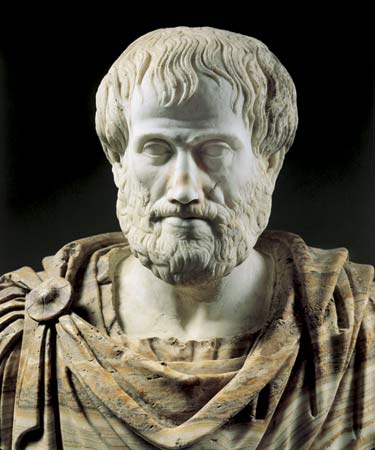
There have been many amazing philosophers through history such as, Plato, Jean-Jacques Rousseau, John Locke, and John Dewey that have helped create and define our ideas of Western civilization but none perhaps have had more of an impact on our American schools than Aristotle. Aristotle was born in Northern Greece to the court physician of the Macedonian royal family, named Nichomachus. Aristotle was first trained in medicine like this father, but in 367 B.C. he was sent to Athens, Greece to study under the philosopher, Plato. Aristotle was a brilliant student that stayed at Plato’s Academy until 347 B.C. when Plato died. Aristotle left the Academy after he wasn’t appointed the head of Plato’s Academy due to some opposing viewpoints between the two men. After spending some time traveling, Aristotle returned to Macedonia in 338 B.C. to tutor Alexander the Great. Aristotle then returned to Athens in order to set up his own school known as Lyceum, after Alexander the Great conquered Athens. Aristotle died in 322 B.C.
Aristotle thought education was extremely important because he believed that in order for a person to have virtue, happiness, and political harmony, they must learn to control their “animal activities” through the process of education. Aristotle’s aim of education was to produce the “good man” since man isn’t good by nature. He believed that education should develop the intellectual capacities of each man along with the man’s individual body to his fullest extent. Aristotle thought women were inferior to men so they would only receive training in gymnastics and domestic arts in order to better manage the household and bear and raise children. Only the aristocracy would be educated and those areas consisted of 4 basics. The basics areas were reading, writing, mathematics, the natural sciences, such as biology, chemistry, physics, physical education, and the humanities such as philosophy, poetry, and grammar. Lastly, Aristotle believed that man learns through habit and reason so his method of education was to organize his material in order to apply it to the law of reason. Aristotle’s theories on education had an enormous impact on the Western civilization but thank goodness his ideas were redefined and expanded on.

Monday, May 10, 2010

Chapter 8: What Are the Ethical and Legal Issues Facing Teachers?


Tenured: “To Be or Not To Be”

Many people don’t fully understand what tenure means or what it takes to become a tenured teacher even though people tend to hold strong views on the subject. According to “The Scope of the Teacher Tenure Act” in North Carolina’s public schools, tenure is the protection from loss of salary. The Teacher Tenure Act specifically states that a tenured teacher can’t “be dismissed or demoted or employed on a part-time basis” because dismissal, demotion, and reduction to part time work is in fact, a loss of salary. In essence, as long as a tenured person’s salary is not reduced, the Teacher Tenure Act is not violated, which means that a principal could be assigned to teach any subject such as history as long as he maintains a principal’s salary in a teaching position. The Constitution of the United States also supports the Teacher Tenure Act under the Due Process clause of the Fourteenth Amendment. The Fourteenth Amendment states that that no state shall deprive any person of life, liberty, and property, without due process of law. If the board of education dismissed or demoted a tenured teacher the government is taking a teacher’s property since a teacher’s job and the salary that goes with it, is his or her property.
In order for a teacher to achieve tenure, that teacher must serve a period as a probationary teacher for about four years even though the time can vary depending on whether or not the teacher is new or had been previously tenured as a teacher. Towards the end of the school year the superintendent submits a list of names of all eligible probationary teachers to the board of education. The board of education then votes on whether or not to grant a probationary teacher tenure. If the board decides to grant tenure and the teacher is notified, the board can’t then rescind the decision. If the board of education wishes to terminate the teacher at that time, it must have grounds to do so, and they must go through the procedures required for dismissing a tenured teacher. A teacher can lose tenure if he or she “no longer performs the responsibilities of a teacher” which can happen by dismissal, resignation, retirement or moving to a non-teacher position.

Tuesday, April 27, 2010

Chapter 7: What Should Teachers Know About Technology And Its Impact On Schools?


It’s Our Future

Computers and technology in general, are now a way of life in our society. Technology is everywhere so we need to seek the best way to utilize it which means teaching our young people about the importance of technology today. Computer literacy is so much more than being able to play a game, send an e-mail, or surf the web. As Eisenberg and Johnson stated in their paper titled Learning and Teaching Information Technology “computer literacy is not only knowing how to operate computers, but to use technology as a tool for organization, communication, research, and problem solving.”
Although our schools are spending a lot of money on technology, students of today will not have the skills necessary to survive in today’s workplace because of the current system in which we are teaching students about technology. As stated in the article, educational associations “are advocating for a more meaningful use of technology in schools.” This means integrated information skills programs should be used instead of our current method of isolated technology skills. Our current methods of isolated technology skills or separate computer classes don’t teach students how to apply the skills they learn in a meaningful way. On the other hand an integrated program would be more effective because it would relate to the content in the curriculum, and it would tie technology in with classroom assignment in a logical way. In order to create integrated information skills programs, teachers need to plan and collaborate with library media specialists and computer teachers so that lessons include both information and technology skills as well as the regular content discussed in a classroom.
Instead of just teaching children how to do a bunch of different skills on the computer, teachers need to focus on the “when” and “why” of technology so that they understand how the skills fit together in a meaningful way. Fitting these various skills together will make it easier for students to problem solve while also allowing them to be both flexible and creative with the computer. Children need to become proficient at many different technologies in order to thrive in their everyday life and in the workplace.

Monday, April 26, 2010

Chapter 6: What Makes A Teacher Effective?


A Dream Begins With One

First time teachers often wonder what skills are necessary in order to make an effective teacher that can reach the minds and the hearts of their students. How can one person teach children or young adults’ math, English, history, and science but also instill a desire to learn and the ability to succeed in a future that is unknown? According to Great Schools, “teaching is one of the most complicated jobs today” which requires a broad range of knowledge in subject matter, curriculum, and standards along with things that can’t always be taught like enthusiasm, a caring attitude, and a love for learning. Teachers also need to have knowledge in classroom management and discipline plus the innate desire to make a difference in the lives of our young people and society as a whole.
So what is it that sets great teachers apart from ones that lack that certain something? The first tip is to set high expectation for all students and to not give up on underachievers. Children need something to reach for and if students have a teacher that doesn’t expect much of them then they won’t reach their maximum potential in the classroom. The second tip is to have clear, written objectives that clearly state what the class will be learning, what the assignments are, and the grading policy for those assignments. The third tip is to be prepared and organized in the classroom so the lessons are structured and precise. As with anything you do, it is very important for teachers to be experts in the subject or subjects they are teaching and to teach in an enthusiastic manner. The fourth and fifth tip is to engage the students and create strong relationships with the children. Teachers need to keep their students motivated and make a conscious effort to include the entire class rather than paying more attention to certain students that the teacher easily clicks with. Teachers also need to show their students that they care about them as people by being warm, accessible, and caring. The final tip is to keep in contact with parents by sending out written reports and scheduling conferences.
Teaching is a difficult job that requires a great deal of skill and a desire to make the world a better place. It takes time and experience to establish ideas that can reach students with different skill levels and personality traits. A great teacher needs to constantly evaluate him or her self and their lesson plans. You can’t just wake up one day and be a great teacher. As Dan Rather, the journalist, once said, “the dream begins with a teacher who believes in you, who tugs and pushes and leads you to the next plateau, sometimes poking you with a sharp stick called “truth.””

Monday, March 29, 2010

Chapter 5: What Is Taught?

2061
In my research I found that The American Association for the Advancement of Science or AAAS is an international non-profit organization whose mission is to “advance science, engineering, and innovation throughout the world for the benefit of all people.” AAAS has several goals, one of which seeks to enhance communication among scientists and engineers as well as the public, in hopes to increase public engagement and strengthen support. The association provides a voice for science and societal issues and defends the integrity of science. Along with of all those goals, the organization also fosters education in science and technology and hopes to advance international cooperation in science. This organization was founded in 1848 and it serves as an educator, leader, spokesperson, and professional association. The association publishes the journal Science, scientific newsletters, books, and reports. AAAS is responsible for four primary program areas. They are Science and Policy, International Activities, Education and Human Resources, and Project 2061.
The American Association for the Advancement of Science started the program called Project 2061 in 1985. When the work began on the project in 1985, Halley’s Comet was visible from Earth so they appropriately titled the project for the next time Halley’s Comet will be seen, since children starting school today will see the comets return. Project 2061 mission is to help Americans become more literate in science, math, and technology since American children seem to lack knowledge in the field. In order to achieve this goal The Projects publication Science for All started the nationwide science standards movement in the 1990’s. Benchmarks for Science Literacy of 1993 sets the learning goals for children in grades K-12, and many of today’s states and national standards are from these benchmarks. Project 2061 continues to reform the curriculum, instruction, assessments, and textbooks. The Project also researches innovative books, computer programs, and professional development workshops. The Organization of Economic Cooperation and Development called Project 2061 is the “single most visible attempt at science education reform in American History.”

http://www.aaas.org/aboutaaas/
http://www.project2061.org/about/default.htm

Chapter 2: What Is a School and What Is It For?


Misleading Assumptions

One may contemplate, “What is the chief purpose for going to school?” Everyone’s individual answers might be somewhat different but you many say one chief purpose of school is to instruct students or perhaps another purpose of education is to prepare students for the work force. However, someone else my say the main purpose of school is to prepare students to become responsible citizens. You may agree with a combination of all three of these misleading assumptions.
If the chief purpose of school is to instruct students, this conveys the message that the teacher just gives information to unknowing students hoping they will remember or recognize the material for the test. In this method, textbooks or other medium is used to instruct students, disregarding other modes of learning such as hands on activities. Education should be about getting a student to generate the information from within themselves rather than just feeding the students the information.
The second misleading assumption relies too heavily on economic values which undermines the purpose of schooling. The article gives a good explanation of this by saying “consider what would happen if the primary value or purpose of a publication were to become economic, rather than [to enrich the life of ideas]” (Gerwin and Mitchell). If education was just based on the skills required for student to succeed in the global marketplace, they would not experience the same love and desire for education which is necessary for students to reach their fullest potential.
The last misleading assumption states that education should be used to prepare students to become responsible citizens. This assumption forces certain values of a society on students to conform to what is considered the social norm which wasn’t the original intention of our founding fathers. Thomas Jefferson believed that education should be used to “strengthen the individual against the tyranny of social norms and conventions” (Gerwin and Mitchell). Education should only be pursued for intrinsic values rather than extrinsic rewards so that it doesn’t lose its cultural value.
Teachers need to be flexible when teaching students and make sure that their teaching is appropriate for the developmental age of the child. Preschool children need to learn through physical activity of both free and structured play. It is important for elementary school children to have their imaginations stimulated through storytelling and art projects. Lastly, high school students need to be challenged to think in abstract ways and be encouraged to participate and investigate.

Monday, March 15, 2010

Chapter 4: What Social Problems Affect Today's Students?


How to Save a Life

Teen suicide is a serious problem that takes the lives of thousands of teenagers each year. In fact, teen suicide is the third leading cause of death for young people. Attempted suicide is a call for help and it is figured that there is at least 25 suicide attempts made for every one that is completed. Females are more likely to attempt suicide than boys, however it is shown that boys are four times more likely to die from suicide attempts than females, due to the more violent methods boys tend to take. Risk factors include aggressive behavior, disruptive behavior, substance abuse and depression.
You may wonder if there is anyway you can tell if a teenager is having suicidal thoughts. Research has indicated that 80% of suicide attempts have had clear warning signs. A few of the warning signs teenagers might have include behavioral problem, sleep changes, declining grades in school, disinterest in activities they once enjoyed, and a withdrawal from both family and friends. Teenagers might also indicate that they are planning to commit suicide by the things they might say or the actions they might take. For example, a teenager could actually say “I won’t trouble you anymore” or they could be more discreet by giving away favorite belongings to family or friends. It is very important to contact someone who can help a teenager that might have some of the indicated warning signs, because in most of these cases, teenagers don’t know how to deal with the problems they are experiencing, and they are in fact looking for someone to help them.
If you have had a teenager that has attempted suicide there are certain factors that must be looked at before a treatment plan is developed for a teenager. Some of the things to take into consideration are the extent of a teen’s symptoms, the teen’s medical history, the opinions of the parents, and a teen’s tolerance to medications and therapies. Three of the common options include individual therapy, family therapy, and hospitalization. Individual therapy is where the teenager works one on one with a counselor, for example, while family therapy provides a supportive environment as the family learns to detail with the problems together. Hospitalization is for more extreme cases of suicide which can provide both safety and a supervised environment with therapeutic aspects. Hopefully, you will be able to identify the warning signs before a teenager can get to the point where they feel that suicide is their only solution.

Chapter 3: Who Are Today's Students in a Diverse Society

The Start of Bilingual Education

Issues involving bilingual education are not new to society and have been discussed for hundreds of years. The state of Ohio was the first state to adopt a bilingual education law in 1839 for German-English instruction, but Ohio would not be the last. Several states followed suit including Louisiana for French-English instruction in 1847 and New Mexico in 1850 for Spanish-English instruction. By the end of the 1800’s, a dozen states had enacted their own laws regarding bilingual education in other diverse languages such as Norwegian, Czech, and Cherokee to name a few. At the beginning of the 1900’s, 4% of American children were recieving part or all of their instruction in German. This percentage is higher than all the children we have enrolled in Spanish-English instruction today.
This trend toward bilingual education began to change during the First World War when people began to question the loyalty of those that didn’t speak English. Bilingual education programs were replaced by English-only instruction laws as a way to “Americanize” the children that didn’t speak English. English-only instruction became the norm for limited English proficient or LEP students until these students began to fall far behind their English speaking classmates and drop out of school.
To help solve this growing problem, the Bilingual Education Act of 1968 was enacted. This act provided federal funding so schools could begin teaching children not only in English but their primary language as well. Individual states began to enact their own bilingual education laws after the Bilingual Education Act of 1968 was passed. The Supreme Court case, Lau v. Nichols, was an extremely important turning point. The case required schools to take affirmative steps to help non-English speaking children overcome language barriers which were holding them back, however the federal government didn’t mandate how these children should be taught. On the other hand, these laws do require that non-English speaking students have the same equal opportunities as their English speaking classmates.

Website:
http://www.rethinkingschools.org/archive/12_03/langhst.shtml

Tuesday, March 9, 2010

Chapter 14: What Can the New Teacher Expect?


It’s My First Day of Class…What Do I Do Again?

New teachers face many challenges their first year of teaching. How are they going to handle a classroom with 30 students, teach all the required material, keep all the children occupied for 6 hours a day 5 days a week, and how are they going to find time to fill out all the paperwork for administration plus grade papers? It’s enough to make anyone feel overwhelmed however this difficult time will also be filled with feelings of excitement, enthusiasm, and accomplishment.
The first thing new teachers need to do is realize they are not alone. If your first day of class brings tears to your eyes, you are not the first teacher this has happened to. If your students rip through your lesson plan at record time, and you don’t know how to occupy the children for the rest of the day, you are not alone. It is important to realize that you as the teacher are an important part of each student’s life and even if you feel overwhelmed, the children will still love you anyway. Lastly, always remember that June is right around the corner.
The second problem many new teacher face is how to handle the issue of discipline and the consequences that come along with it. Before your first discipline issue arises, make sure you have your plan set ahead of time. Don’t create an elaborate plan that is difficult to remember, and try to think back to strategies that have worked in the past. Explain the rules of the class to the students on the first day and make sure they understand. Praising students for good behavior is extremely effective and if a student does break a rule be consistent with your consequences. If you as a teacher say you are going to send a student to the office or give them detention, follow through with what you said so the children know you’re telling the truth. If you feel like you are being too harsh, you can change your consequences later. Always remember, you are in charge of the classroom not the students.
The third and last issue involves paperwork. Remain as organized as you can and create different files for homework, class work, assessments, forms from the office, notes from home, and handouts. For young children, you can color code the stacks so that they understand where each piece of paperwork goes. Finally, keep all the notes from students and parents that compliment you so that when you are having a difficult day, you can pull those papers out and remember why you chose to become a teacher in the first place.


Sunday, March 7, 2010

Chapter 1: Why Teach?


What Motivates A Teacher?

People often wonder what motivates a teacher to teach. What makes these educators get up out of bed everyday and get ready? With their coffee in one hand and a stack of papers in the other, they head to a classroom with more than 30 sometimes screaming children or unruly teenagers? It all comes down to intrinsic rewards and the help teachers can receive from supportive administrators. Intrinsic rewards are not one’s salary or benefits, but the feeling of self-respect, accomplishment and personal growth that can only be understood by the person experiencing those rewards.
Theorists agree that what motivates people inside is a psychological complex process but no comprehensive theory exists. However, a theorist named Abraham Maslow believed that people want to satisfy their lower level needs as well as their higher level needs. Lower level needs include security, belonging, and the need for love while higher level needs are self esteem, self actualization, and achieving one’s full potential. A study conducted by Pastor and Erlandson in 1982 found that teachers measure their job satisfaction by participation in decision-making, having both freedom and independence, experiencing a challenge, and lastly, by having the opportunity to learn and be creative. Another study by Sergiovanni found that teachers get great satisfaction when they affect the lives of their students and experience both recognition and the feeling of responsibility.
Administrators can also encourage their teachers to do their best everyday. In 1983, a survey by Brodinsky and Neill found that shared governance, in-service education, and supportive evaluation were all effective polices which helped motivate educators. Shared governance is said to promote harmony among the teachers and administrators while giving teachers a vested interest in school performance. In-service education is also helpful because it allows teachers to share ideas and discuss professional concerns with other fellow teachers. These sessions and seminars can improve a teacher’s techniques while giving them new ideas to try in their own classroom. Lastly, a good evaluation system provides teachers with feedback so that they can grow as educators.