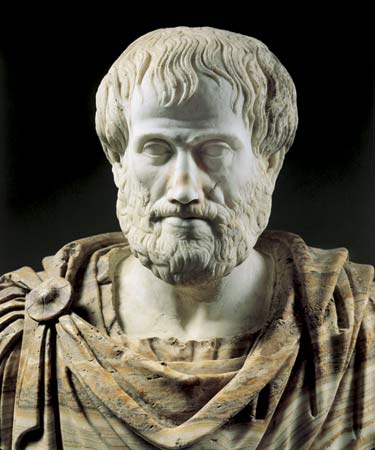
The Great Philosopher
There have been many amazing philosophers through history such as, Plato, Jean-Jacques Rousseau, John Locke, and John Dewey that have helped create and define our ideas of Western civilization but none perhaps have had more of an impact on our American schools than Aristotle. Aristotle was born in Northern Greece to the court physician of the Macedonian royal family, named Nichomachus. Aristotle was first trained in medicine like this father, but in 367 B.C. he was sent to Athens, Greece to study under the philosopher, Plato. Aristotle was a brilliant student that stayed at Plato’s Academy until 347 B.C. when Plato died. Aristotle left the Academy after he wasn’t appointed the head of Plato’s Academy due to some opposing viewpoints between the two men. After spending some time traveling, Aristotle returned to Macedonia in 338 B.C. to tutor Alexander the Great. Aristotle then returned to Athens in order to set up his own school known as Lyceum, after Alexander the Great conquered Athens. Aristotle died in 322 B.C.
Aristotle thought education was extremely important because he believed that in order for a person to have virtue, happiness, and political harmony, they must learn to control their “animal activities” through the process of education. Aristotle’s aim of education was to produce the “good man” since man isn’t good by nature. He believed that education should develop the intellectual capacities of each man along with the man’s individual body to his fullest extent. Aristotle thought women were inferior to men so they would only receive training in gymnastics and domestic arts in order to better manage the household and bear and raise children. Only the aristocracy would be educated and those areas consisted of 4 basics. The basics areas were reading, writing, mathematics, the natural sciences, such as biology, chemistry, physics, physical education, and the humanities such as philosophy, poetry, and grammar. Lastly, Aristotle believed that man learns through habit and reason so his method of education was to organize his material in order to apply it to the law of reason. Aristotle’s theories on education had an enormous impact on the Western civilization but thank goodness his ideas were redefined and expanded on.
There have been many amazing philosophers through history such as, Plato, Jean-Jacques Rousseau, John Locke, and John Dewey that have helped create and define our ideas of Western civilization but none perhaps have had more of an impact on our American schools than Aristotle. Aristotle was born in Northern Greece to the court physician of the Macedonian royal family, named Nichomachus. Aristotle was first trained in medicine like this father, but in 367 B.C. he was sent to Athens, Greece to study under the philosopher, Plato. Aristotle was a brilliant student that stayed at Plato’s Academy until 347 B.C. when Plato died. Aristotle left the Academy after he wasn’t appointed the head of Plato’s Academy due to some opposing viewpoints between the two men. After spending some time traveling, Aristotle returned to Macedonia in 338 B.C. to tutor Alexander the Great. Aristotle then returned to Athens in order to set up his own school known as Lyceum, after Alexander the Great conquered Athens. Aristotle died in 322 B.C.
Aristotle thought education was extremely important because he believed that in order for a person to have virtue, happiness, and political harmony, they must learn to control their “animal activities” through the process of education. Aristotle’s aim of education was to produce the “good man” since man isn’t good by nature. He believed that education should develop the intellectual capacities of each man along with the man’s individual body to his fullest extent. Aristotle thought women were inferior to men so they would only receive training in gymnastics and domestic arts in order to better manage the household and bear and raise children. Only the aristocracy would be educated and those areas consisted of 4 basics. The basics areas were reading, writing, mathematics, the natural sciences, such as biology, chemistry, physics, physical education, and the humanities such as philosophy, poetry, and grammar. Lastly, Aristotle believed that man learns through habit and reason so his method of education was to organize his material in order to apply it to the law of reason. Aristotle’s theories on education had an enormous impact on the Western civilization but thank goodness his ideas were redefined and expanded on.

